After approaching a few publishers, it quickly became clear that I was not going to find one who would handle to project. The approach was always declined because “this is not our subject, good Luck!” I was never really surprised to hear that because I had an idea that my photographs could be too ‘politically sensitive’ to be published by an established house.
The subject of my book is focused on people who are paying the price of a political ‘game’ that has been going on between India and Pakistan since 1947 and concentrates on daily life under military occupation, rather than the politics.
Self-publishing is never the best option but if you really believe that your book will sell and you are prepared to devote so much time that your real job takes a back seat for a long while, then go for it.
To be successful, photographic books must be printed to a very high standard. Your major buyer will be the art manager of a bookshop. They will look at the quality first and many of them will not even consider stocking a paperback photo book unless you are a very well known photographer/author. This is one of the central dilemmas of self publishing: getting the reproduction and binding quality right for the market.
Once you have a clear picture of how you want your book project to look, you need to start conducting some market research. You need to identify who and where your potential customers are. Even at this early stage it’s a good idea to invite a well know and relevant expert to write a preface or an introduction for your book. Having a “name” writing the preface will help when you send press releases to individuals, bookshops, head offices, media and anyone else you might think could be interested in your book.
While conducting your market research start working on the business plan. Everything in publishing costs money, so you will need to consider the costs of design & layout, pre-press, printing, binding, transport and storage – and these are just the “up front” expenses. Your research must involve looking at the different qualities of paper, inks and binding available. It’s vital to look at what your competitors (main publishers) are printing with.
Get an ISBN at least three months before the publication date, this will make your title traceable in the market. It’s the book’s identity if you don’t have it, you can’t sell it to the major bookshops. Always remember that the main difference between a self-publisher and a publishing house is not the book quality but the number of books published.
Financing your book is a real nightmare. You need a valid business plan to get or borrow money. It’s at this stage that you will have to deal with people who care very little (or nothing at all) about your book. It’s subject and quality. They are only interested in the “bottom line” and want to see your market research and the cash flow forecast. If you are the author and the publisher, banks and other organizations will be nervous about lending you money. Their automatic assumption will be that you just want your nice photographs published in a book format. The greatest hurdle is proving them wrong. Your book is a product that will sell and make a profit.
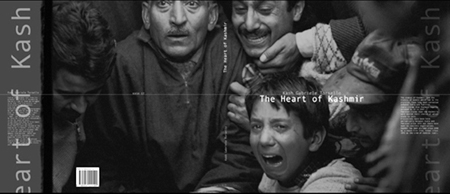
THE HEART OF KASHMIR
Hard Back, ISBN 0 9542245 0 7
Published in UK by KASH GT the 3rd of December 2002
111 Black & White photos printed in four-colour, 192 pages, size 23×28 cm
Photograph & Text: Kash Gabriele Torsello
Foreword: Foreign & Commonwealth Office, Preface: House of Lords
RSP £29.00
www.kashgt.co.uk