Interview by Si Barber
Tom, when you started out you aimed to work for NGOs like Save the Children. From a business development standpoint, how did you manage to break into this sector? Is it more about cold-outreach with a specific portfolio, or navigating the complex procurement and vetting processes of large organizations?
From the beginning of my photography journey I knew I wanted to work primarily in the third sector. That took some figuring out but I knew that I needed to have a reasonable understanding of at least two things: the issues and stories at the heart of the work on and how the sector functioned, practically speaking. And of course, all this alongside a portfolio that would persuade prospective clients I could do the job. I remember reading Roman Krznaric’s book at the time - ‘How to Find Fulfilling Work’ - and being impressed by the idea that you can’t think your way into the kind of job you want - you have to get real world experience and everything flows from there (including the sense of you being any good at it or even enjoying it). So, after a degree in languages and a masters in Transnational Studies, I did a few different things: I joined the School for Social Entrepreneurs, I piggybacked onto a DFID-funded health programme in South Sudan and started making some work. Once back in the UK, I started showing that work around, submitting it to places and at the same time applied to work part-time at a DEC-member NGO. I constantly asked to meet photographers and quizzed them, shadowing if possible. My work inside the agency taught me something of how NGO's worked and what they needed. I learnt the language of that sector and leapt at any opportunity to learn more and get more experience. And these things, with some perseverance, led to me to relationships, trust, understanding and a network in the sector - and a portfolio too.
In my own dealings with the NGOs I find they are increasingly keen to acquire 'all rights' on the work they commission, which prevents me on syndicating the work to offset the lower fees they seem to offer. Is this a common experience in your view?
Unfortunately, contracts in the sector can be a mixed bag. At best, protective of the people they are serving; at worst, exploitative of the freelancers they work with. After 14 years’ experience working with NGOs and having dealt with countless needlessly aggressive contracts, I now never ignore or skim read the paperwork, but will often seek to open up a dialogue with the client to retain copyright, moral rights and pursue a generous but reasonable rights-managed licence for usage. Personally, given the nature of the stories I work on, I wouldn’t re-license the work to organisations that might use the imagery as stock or decontextualise images, but have re-licensed work to relevant partners of the NGOs I work with (be they operational, funding and donors, media etc). It seems to me that there are as many ways of doing this as there are clients and photographers, but I do think it’s important for a photographer to think carefully about contracts and usage, and work to engage their clients to broaden their understanding of the benefits this brings to both parties when done well. It is different to the commercial world, and there are very good reasons why images and stories shouldn't be sold or treated in the same way, but it is vital to the sector that they work with professionals who have thought about and are committed to taking the ethics of representation seriously, who are familiar with the various challenges that the work can pose and are relational and empathic in their processes. By undermining and underpaying these specialist photographers, they simply won’t be able to survive, so it’s important to charge with the long view in mind and educate your clients as to why that’s important.
I imagine you will have accumulated a substantial body of images spanning several countries and crises over the years. Do you syndicate this work and if so, are you mindful of ethical issues with such monetisation?
I’ve touched on this already really, but the consent and licensing agreements for my various projects have varied so much over the years - given that most of my access to these events, people and places has been predominantly through NGOs - that it’s really complicated to syndicate the work and make longterm income from my imagery. That said, clients have licensed work for press and editorial, relicensed their own work (within the limits of the agreed consent) and work has been retrospectively exhibited and published. Whilst this isn’t really an income stream for me, it can generate more work in the future.
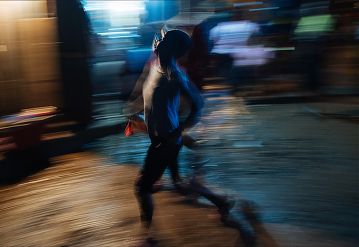
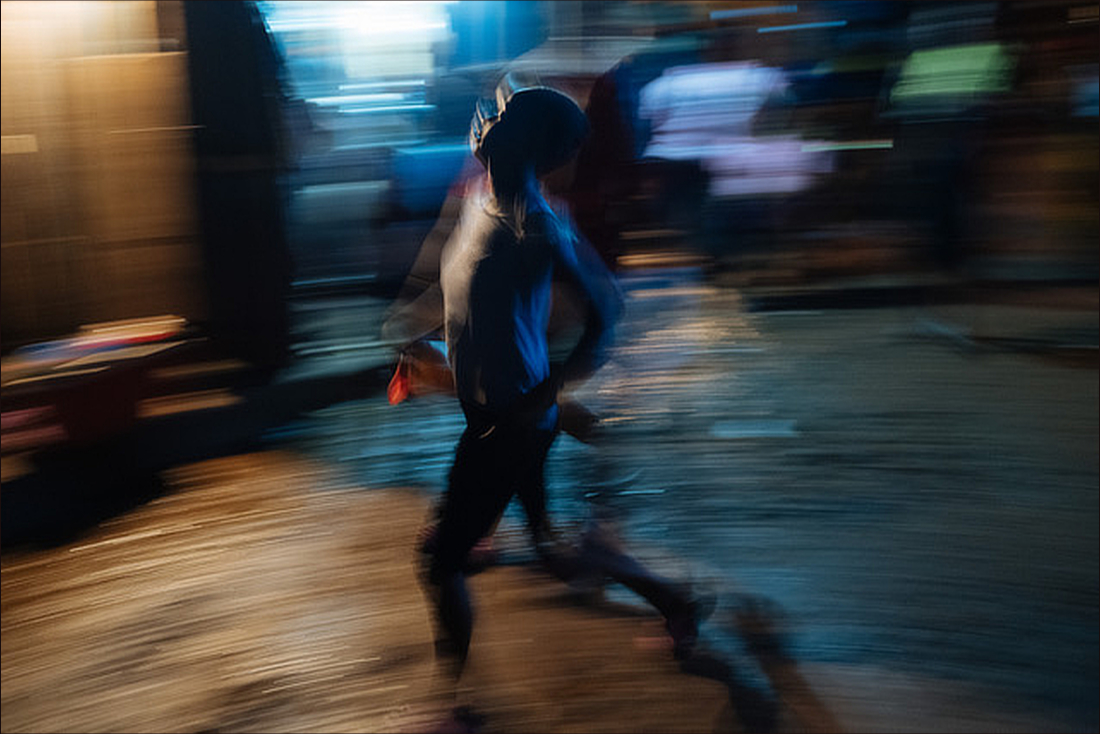
One of your most innovative ventures was co-founding Run For Your Life, a print magazine that uses running as a thread to explore human struggles, processing trauma, and personal growth. How does this interact with your approach photography, and are there pleasures in print that the screen cannot offer?
My approach is trauma-informed, which instead of asking the question, ‘what’s wrong with you?’ seeks to find out what happened in someone’s life and asks the question ‘what is right with you?’. In this way, RFYL was a perfect example of that approach. Running, for nearly all the people we photographed and interviewed was both a way of processing their own life story, but also a way to see things afresh, grow and feel strong and have a sense of agency about the future. My photographic practice at its core places listening first and then invites collaboration and partnership in the seeing. But back to magazines. Yes, the physical object is limited and tangible - the texture of the paper, the weight of the object, the feel and smell of it in your hands. You can put it down and return to it. You can pass it on. You can screw it up and throw it away in disgust… it’s just so much better than digital. I am often inspired by the people I work with and before this project I wasn’t a runner. After interviewing Ken, the 70-something runner on the cover, I was inspired and ran the Snowdonia marathon the following year.
Your work for Airbnb and the NHS, amongst others is very human-centric. When pitching to large corporate clients, how do you sell "humanity and compassion" as a measurable return on investment for their brand?
Now, more than ever, brands are learning the importance of authenticity and connecting with audiences and staff on a human level. Research shows that companies committed to social purpose attract and retain top talent, build customer loyalty and secure greater investment - it’s basically smart business.
Having covered humanitarian crises in South Sudan and the Philippines, are you generally guided by your clients about the ethics of documenting trauma or are you left to work within your own sense of what is right, and if so do they ever clash?
Nearly every client I’ve worked with has had some form of a photo policy dealing with ethics. Most of these are reasonably vague and led by language, falling powerfully short of reference visuals (I.e. the vocabulary of good practice is built through words rather than pictures). As a result, working in these environments requires an act of translation. How to put these principles into practice. So while it’s all well and good to have a policy, how that policy is enacted and implemented is totally dependent on the interpretation of the photographer (their eye, the images they’ve seen, what’s available to them in terms of people, equipment, light, conditions, environment). I’ve never had a ‘clash’, but I’ve chosen to interpret policies and make pictures in ways that align with my values, ethics and experience as a photographer in the sector. How pictures are used is often totally out of my hands, but I have had to say things occasionally.
When working in such environments are there formal procedures adopted by your clients that allow you to monitor and manage your mental heath or is that regarded as entirely your responsibility?
It’s getting a bit better, but in reality it is nearly entirely my responsibility. Recognising your own warning signs comes with experience, as does knowing what systems to put in place to keep you healthy when travelling away from home, family, friends and routines. In some places, just getting out for a walk or run etc can be impossible from a security perspective, so there can be real challenges to looking after yourself, but it is vital to find small ways to do this to avoid burnout or worse.
In an era of fast content and TikTok-style visual churn, your work leans toward the slow, considered narrative. How do you financially sustain projects that require deep immersion and time, when the market increasingly pays for volume and speed?
Good question! Freelance photography (for me) has often been a bit of a balancing act. I shoot video, I work as a consultant, I write, I take on work to pay for the work I want to make and I try and keep project costs down. For me, it’s important to make the time (often at personal cost) to make the work that energises me. I need this kind of creative practice on a personal level, but also making work my own way is often helpful in trying out things, taking new directions and getting new work. And with regards to the general direction of things - I don’t think that what the algorithm is going to our attention and our minds is good for us and I think people are beginning to realise that. If you only make work to suit the algorithm that requires a certain story or look and means that you have to kick out a new post every day/week, then certain kinds of work: nourishing work, unusual work, just won’t get made. And that’s a problem. For me, photography is about slowing down and paying attention, and that feels more needed than ever.
You suggest that newcomers should "politely ask to shadow people." From your perspective as an established professional, what is the most appropriate way for a young photographer to approach you without being a drain on your time or resources?
Just show interest, be polite, maybe offer to help out in some way maybe. It’s hard to turn someone down who is interested, proactive, conscientious and curious. And ask specific questions. I hugely believe in mentoring. I’ve benefitted massively from other wiser folk in the industry and am always happy to chat to people. I think I grew up in the industry in a moment that felt very isolating; people guarding secrets, gatekeeping, viewing peers as competition, and a good dose of pessimism. I think we need more collectivism, more openness, transparency and sharing if we’re to overcome the myriad challenges that face photographers at the moment (AI, cost of living crises, global political instability, shifting fundraising environment). So, if I have the time, I’ll always reply to an email. Solidarity not suspicion.
Finally, what are you working on at the minute?
I’m just wrapping up a busy month of studio work, some consultancy and am now getting ready for a month long commission to Chad and Uganda. I love working in a team and I’m currently working on collaborations with friends and hope to lean into that a lot more this year. Other than that, I’m about to launch a little side project making a picture and sending out a postcard print to people once a month. I’m keen to make things in the real world again, I want to keep costs very low and just do this as a creative exercise. Sign up to my newsletter if you want to hear more about that. In April, I’m launching a small exhibition with collaborators at Homerton Library showing work from an ongoing long term project documenting a community of people who gather to watch the sun rise on the Hackney Marshes each solstice and equinox. Again - more on that in my newsletter. Finally, I’m picking up a portrait project working with survivors of human trafficking in London, which has been on pause for a while. It’s exciting though as it’s involved creative collaboration with the survivors and also a glasses maker, helping me to experiment with some strange optics. 2025 was a tough year, but I feel excited about 2026.
See more work by Tom Price