Celine, You have spoken about difficulty of making a living solely through photography and how teaching, commissions, mentoring and workshops play a role. What structures or strategies do you think are important for photographers, especially in documentary/fine-art, to build sustainable practices without compromising their personal vision?
I think it’s important to find a way of making a living that aligns with who you are and doesn’t compromise your practice or beliefs. Making a living solely from personal work, especially within documentary or fine-art photography can be very difficult. For me, having multiple income streams has been essential. I made a conscious decision to step away from commercial work and instead focus on teaching, mentoring, workshops and selective commissions that feel connected to my values. These areas support my practice rather than pulling me away from it. I think sustainability comes from building a structure around your work that protects your creative integrity.
In an interview you confessed to being unfulfilled with commercial editorial photography. This is a market that has greatly contracted over the last decade as publications struggle financially, making them risk averse and unwilling to take a chance. Did this mirror your experience?
I’ve always had a strong appreciation for editorial photography. My challenges with it were never about a lack of creative risk, but more about the dwindling fees and the inconsistency of work. It became increasingly difficult to rely on financially. Fortunately, I’m no longer dependent on editorial commissions for income, which has allowed me to enjoy them again when they do arise. My most recent commission was in December for The New York Times Magazine, where I photographed 96-year-old Ghanaian photographer James Barnor in his retirement home in London. He shared stories and reflections on his life’s work, along with showing me his life’s archive of work, it was an incredibly special experience. Editorial assignments can open doors to encounters that wouldn’t otherwise happen. It was commercial photography that I ultimately found unfulfilling. It shifted the focus of photography towards money in a way that didn’t sit comfortably with me, and that wasn’t why I came into this field.
People seldom appear in your work, but their accoutrements and possessions do. Presumably these objects act as ciphers in their absence. For example your Mother's recipes, written in cursive on stained notepaper must to you express her personality more than words ever could.
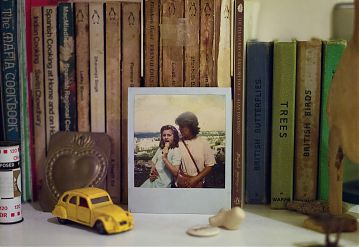
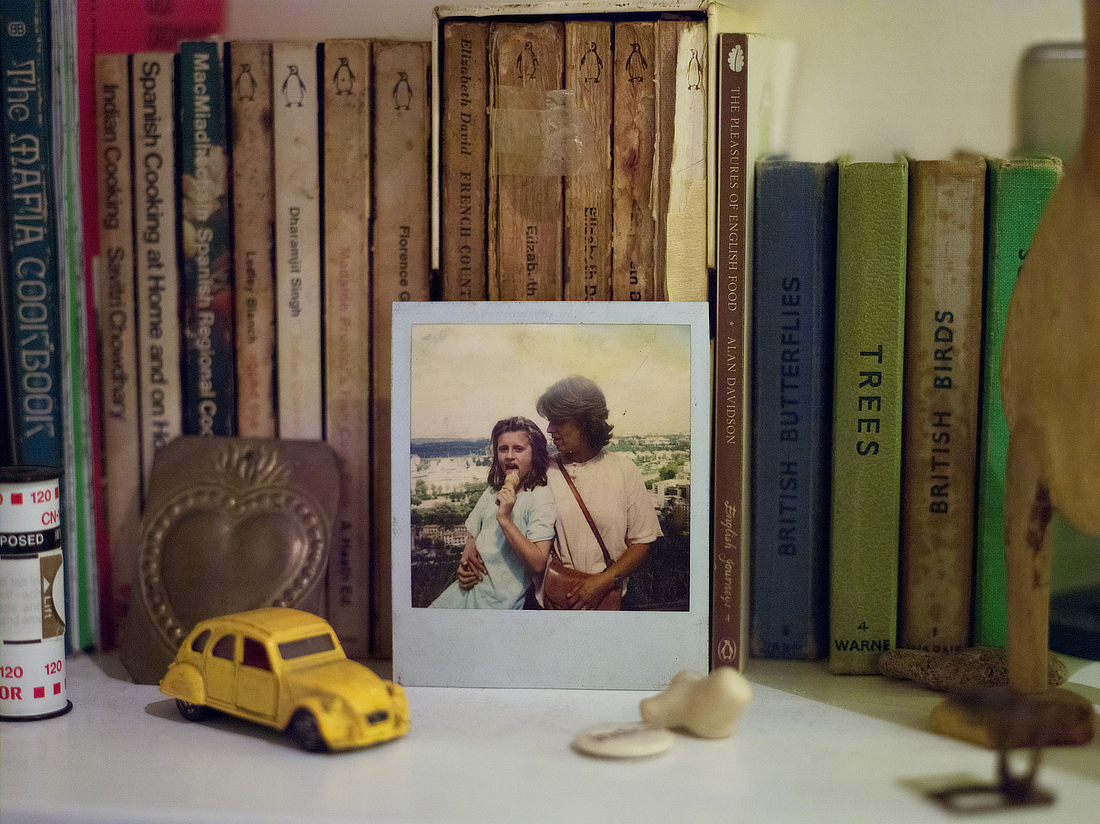
People rarely appear directly in my personal work, but they are always present through objects or spaces. I’m interested in how everyday items can hold memory, emotion and identity. Objects become a kind of language; quiet but deeply expressive. My mother’s handwritten recipes for example, carry her presence in a way that feels more intimate than a portrait. The marks, stains and handwriting resonate with her life and gestures.
Tulip began as a daily documentation of small household details during your mother's final year. Reflecting on the thousands of images you captured, what criteria did you use to select and contrast them for the book?
The editing process for Tulip was instinctive but also very considered. I was looking for images that carried emotional weight, but also how they could speak to one another when placed together in book form. The rhythm and pacing became important, balancing quiet moments with more visually complex or emotionally driven ones. I wasn’t trying to tell a linear story, but rather to create a space where the viewer could feel something of that time.
Those objects are also very personal and specific in a way that must make their significance difficult to communicate to the casual viewer. How do you overcome this?
The work is very personal, but I think specificity can actually create connection. Even if a viewer doesn’t know the exact story behind an object, they can bring their own experiences to it. I try not to over-explain. Instead, I allow space for ambiguity so the viewer can engage emotionally rather than intellectually. The hope is that these personal details become universal through feeling rather than explanation.
You mention being inspired more by abstract painting and sculpture (for example, the work of Mark Rothko) than conventional photography, and your strong interest in the space around the subject within a work of art. How do these non-photographic forms of expression continue to inform your photographic vision and what advice would you give other photographers about looking beyond photography for inspiration?
I’ve always been drawn to painting and sculpture, as you say particularly artists like Mark Rothko, and also Rachel Whiteread is a big inspiration. I’m interested in how the space around a subject can hold as much weight as the subject itself. That sense of quiet, of atmosphere, informs how I compose images. Looking beyond photography has been essential for me. It opens up new ways of seeing. I’d encourage photographers to spend time with other art forms, it can shift your perspective and deepen your visual language.
You've successfully published two monographs with Dewi Lewis Publishing, who are often the choice for photographers going into print. What do you believe they offer over larger publishers?
Dewi and Caroline who run Dewi Lewis Publishing are deeply committed to photography and the photobook as an art form. Compared to larger publishers, there is a more personal relationship, they offer a level of care and understanding that feels aligned with the kind of work I make.
What advice would you give to photographers on developing a personal project into a publishable book. How can they stand out amongst the competition?
I think it’s important to fully understand your work; what it’s about, why it matters to you, how it should be experienced and why you think it is suited to a book form? Editing is crucial, as is sequencing. A strong book isn’t just a collection of images, but a carefully constructed narrative or emotional journey. To stand out, the work needs to feel honest and resolved. It’s also about persistence; sharing your work, getting feedback and being open to the process. There’s no quick route, it’s a long process.
You're a member of the Royal Society of Arts. What practical benefits does this bring to you in your practice?
Being a member of the RSA connects me to a wider network of practitioners across different disciplines. It offers opportunities for dialogue, collaboration and access to events and resources. It contributes to a broader sense of community and exchange, which I value in my practice.
Finally, what are you working on at the moment?
I had a baby two days after finishing my last book A Stranger in my Mother’s Kitchen, so I took some time away from making personal work while navigating the intensity of early motherhood. I’m now beginning to return to a new body of work. I’m continuing to explore themes around memory, absence and the domestic space. I’m working on new images and writing that build on these ideas, while also beginning to think about how these elements might come together as a future book. Alongside this, I’m continuing with teaching and mentoring, which remain an important part of my practice.
I’ve also just returned from Houston, where I had a new exhibition opening as part of the FotoFest Biennial 2026.
See more work by Celine Marchbank